Dry Needling
Dry Needling in Theraist Physiotherapy Bludenz may be used as a complementary physiotherapy method for selected muscular complaints and pressure-sensitive areas. The application is individually assessed based on the physiotherapy assessment and current symptoms.
Treatment for Muscular Complaints and Pressure-Sensitive Areas
Muscular complaints can present in many different ways.
Some patients report localised pain, a feeling of tension, or pressure-sensitive areas within the muscles. Others experience symptoms mainly during certain movements, physical loading, or sporting activities.
In these situations, a common question is:
Could Dry Needling be appropriate for my symptoms?
Dry Needling is a treatment technique that may be used as a complementary method within physiotherapy for selected muscular complaints.
At Theraist Physiotherapy Bludenz, the use of Dry Needling is assessed individually based on the physiotherapy assessment, your current symptoms, and your personal treatment situation.
Dry Needling is not automatically used for every muscle tension or pain complaint.
The important question is whether the method is appropriate for your individual situation and can be meaningfully integrated into your physiotherapy treatment plan.
What Is Dry Needling?
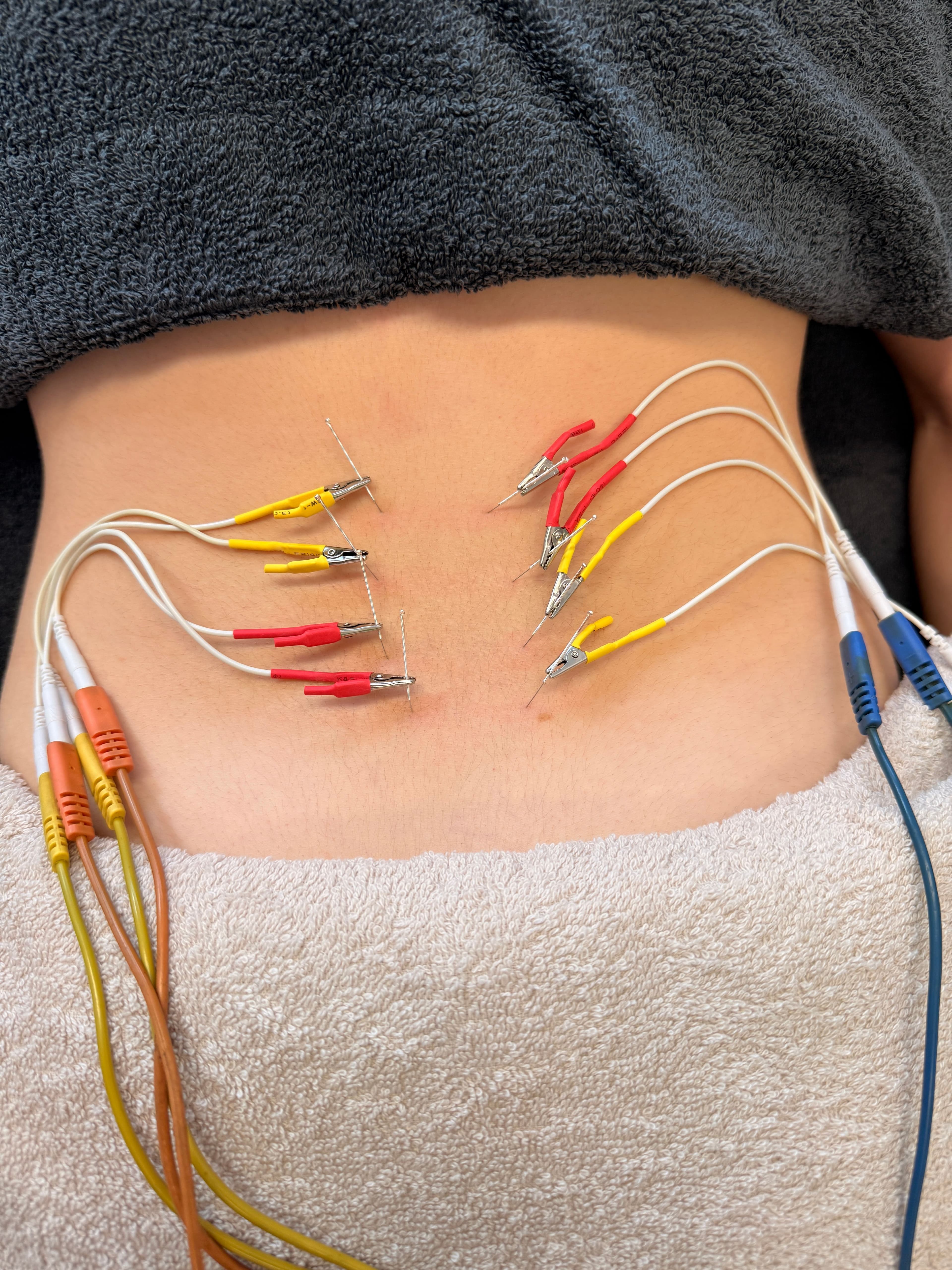
Dry Needling is an invasive treatment technique in which sterile, single-use needles are inserted into selected areas of muscle tissue.
The needles used are similar to acupuncture needles.
However, Dry Needling and acupuncture are based on different treatment concepts.
In Dry Needling, the application is guided by the physiotherapy assessment and the individually identified muscular and functional findings.
The technique may be used as a complementary physiotherapy intervention for selected pressure-sensitive muscle areas or muscular complaints.
What Are Myofascial Trigger Points?
The term myofascial trigger point is commonly used to describe a locally pressure-sensitive area within muscle tissue.
Pressure on such an area may reproduce local symptoms.
In some patients, perceived symptoms may also be felt in other areas of the body.
However, the assessment of muscular complaints should not be reduced exclusively to individual trigger points.
Pain and physical complaints can be influenced by various factors.
These may include:
- Physical load
- Changes in training load
- Repetitive movements
- Reduced physical activity
- Muscle strength and physical capacity
- Previous injuries
- Sleep
- Stress
- Individual pain perception
For this reason, we do not view Dry Needling as an isolated treatment of a single “pain point”.
The physiotherapy assessment and your individual situation form the basis of treatment planning.
When May Dry Needling Be Used?
Dry Needling may be considered as a complementary treatment method for selected muscular complaints.
Possible areas of application may include:
- Local muscular complaints
- Pressure-sensitive muscle areas
- Symptoms during certain movements
- Muscular complaints following physical loading
- Shoulder and neck complaints
- Back-related muscular complaints
- Muscular complaints of the lower extremities
- Sport-related muscular complaints
Whether Dry Needling is appropriate for a specific complaint should be assessed individually.
Not every form of pain or muscular complaint requires treatment with needles.
What Happens During a Dry Needling Treatment?
Before Dry Needling is performed, a physiotherapy assessment is carried out.
We discuss your current symptoms, their development, and possible factors related to physical load.
Depending on your individual situation, mobility, muscle strength, movement control, and functional movements may be assessed.
If Dry Needling is considered an appropriate complementary method, the areas to be treated are selected individually.
A sterile, single-use needle is then inserted into the selected muscle area.
The number of areas treated and the duration of the application depend on the individual situation.
After the treatment, the response of the treated area is taken into account.
Depending on the physiotherapy treatment plan, active exercises, movement, or individually adapted training may follow.
Is Dry Needling the Same as Acupuncture?
No.
Although both methods use thin needles, the underlying treatment concepts are different.
Acupuncture is part of traditional Chinese treatment concepts and is based on specific acupuncture points and traditional explanatory models.
Dry Needling is guided by the physiotherapy assessment and muscular and functional findings.
The areas treated are selected according to the individual physiotherapy situation.
Is Dry Needling Painful?
The sensation experienced during Dry Needling varies from person to person.
Insertion of the needle may be perceived as a brief prick.
Different temporary sensations may occur during treatment.
These may include:
- A brief pulling sensation
- Pressure
- A local muscle response
- Temporary tension
After treatment, the treated muscle area may temporarily feel sensitive.
Some patients describe a sensation similar to muscle soreness.
Your individual response should be considered during the further course of treatment.
What Is a Local Twitch Response in Dry Needling?
During treatment, a brief involuntary response of the muscle may occur.
This is commonly referred to as a local twitch response.
The response may be perceived as a brief twitch of the muscle.
A local twitch response may occur during needle application.
However, it is not automatically necessary for Dry Needling treatment.
Treatment should not be focused exclusively on producing as many muscle responses as possible.
The individual treatment situation is the deciding factor.
What Side Effects May Occur After Dry Needling?
Dry Needling is an invasive treatment technique.
As with other invasive procedures, temporary reactions or side effects may occur.
Possible reactions may include:
- Local pressure sensitivity
- Muscle soreness-like symptoms
- Small bruises
- Minor bleeding at the needle insertion site
- Temporary tiredness
- Temporary changes in symptoms
Relevant health information should be discussed with your physiotherapist before treatment.
If unusual or significantly increasing symptoms occur after treatment, appropriate medical or physiotherapy assessment should be considered.
When Should Dry Needling Not Be Used?
Dry Needling is not appropriate for every patient.
An individual assessment is necessary before treatment.
Particular caution or modification of treatment may be required in certain health situations.
These may include:
- Certain blood clotting disorders
- Use of certain blood-thinning medications
- Acute infections
- Skin changes or inflammation in the treatment area
- Certain medical conditions
- Pregnancy, depending on the treatment area
- Significant fear of needles
This list is not exhaustive.
Relevant medical conditions, medications, and health-related factors should be disclosed before Dry Needling treatment.
Is Dry Needling Combined With Active Physiotherapy?
Dry Needling may be used as a complementary method within a physiotherapy treatment approach.
We do not automatically consider needle treatment to be a standalone long-term therapy.
Depending on your individual situation, Dry Needling may be combined with other physiotherapy interventions.
These may include:
- Active movement
- Individual exercises
- Strength training
- Mobilisation
- Movement control exercises
- Load management
- Functional training
- Sport-specific exercises
The methods used depend on the physiotherapy assessment and your personal treatment goals.
What Role Does Movement Play After Dry Needling?
Depending on the individual situation, movement may be appropriate after Dry Needling treatment.
The type and intensity of movement should be adapted to your current response and physical capacity.
Depending on the treatment goal, simple movement exercises, active exercises, or individually adapted training may be used.
For physically active patients, current training load should also be considered.
There is no single recommendation that applies to every patient.
How Often Should Dry Needling Be Performed?
There is no universally applicable number of Dry Needling treatments.
The frequency of application depends on various factors.
These include:
- Type of symptoms
- Duration of symptoms
- Response to treatment
- Physical load
- Additional physiotherapy interventions
- Individual treatment goals
The course of treatment should be reviewed regularly.
If a method does not appear to make a meaningful contribution to the individual treatment process, the treatment approach should be adjusted accordingly.
Dry Needling for Athletes
Sporting activities and physical loading may be associated with muscular complaints or locally pressure-sensitive muscle areas.
Dry Needling may be used as a complementary method for selected sport-related complaints.
However, a broader assessment of sporting load is important.
Relevant factors may include:
- Training volume
- Training intensity
- Changes in physical load
- Recovery
- Muscle strength
- Sport-specific demands
- Previous injuries
Dry Needling does not replace individually adapted training or structured rehabilitation.
Depending on the individual situation, the technique may be integrated as a complementary component of a sports physiotherapy treatment approach.
Dry Needling in Bludenz at Theraist Physiotherapy
At Theraist Physiotherapy Bludenz, Dry Needling may be used as a complementary method within physiotherapy for selected muscular complaints.
An individual physiotherapy assessment is carried out before treatment.
We consider your current symptoms, physical situation, and possible demands related to everyday life, work, or sport.
If Dry Needling appears appropriate for your individual situation, the technique may be integrated into your physiotherapy treatment plan.
Depending on the assessment findings, active movement, strength training, and other physiotherapy interventions may form part of treatment.
Please Note: This content is provided for general informational purposes only and does not replace an individual medical or physiotherapy assessment. If you experience new, severe, or unexplained symptoms, a medical evaluation may be necessary.
Important: If you experience sudden paralysis, numbness or loss of sensation, or problems with bladder or bowel control, seek immediate medical attention.
Begin your journey
Fill in the form – we will contact you within 24 hours for a no-obligation first appointment.
Book appointment
